Nowadays, scammers use deepfake videos, fake voice calls, and false images to trick people. Artificial intelligence (AI) can mimic your voice, image, or text and create freely available online videos, so in this article, we will guide you on how to protect data from AI deepfakes.
The real question is:
How do you prevent hackers from getting your personal information?
And can people stay away from making fake deepfakes by any laws or tools?
This guide discusses how to protect your data against AI deepfakes for free, which controls and tools are helpful, and what you can do instantly to protect your online privacy.
What is Deepfake?
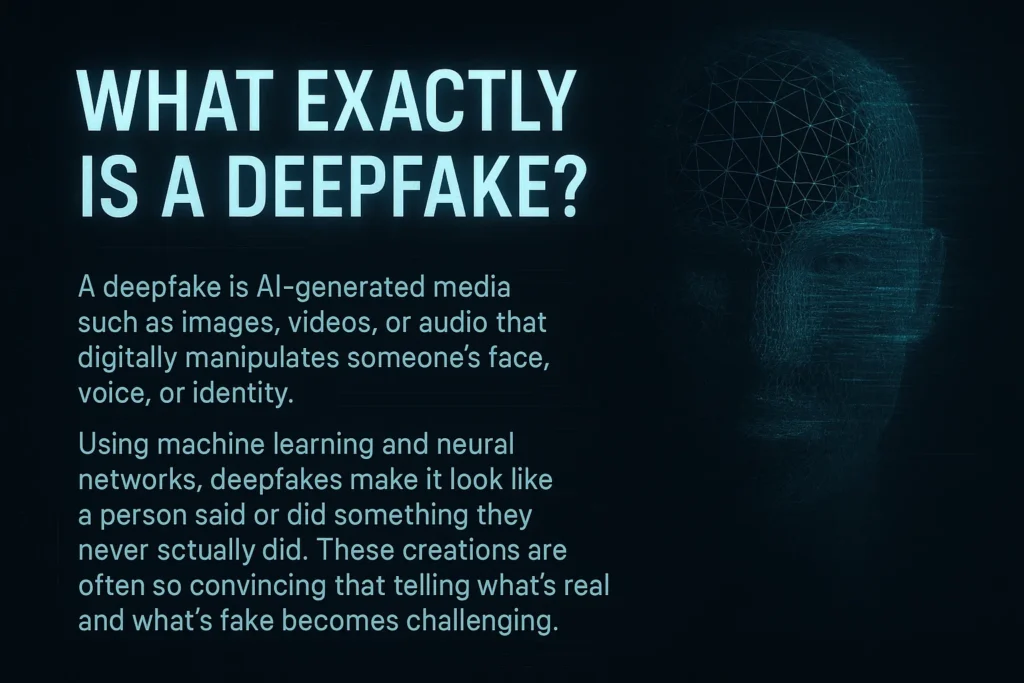
Deepfakes refer to images, videos, or audio generated through artificial intelligence (AI) that alter or modify the identity of a real person.
For example:
- Receiving spoofed calls in the name of a family member or relative demanding money.
- Editing politicians’ speeches to spread fake messages.
- Making fake intimate videos is one of the fastest-growing cybercrime categories.
- Writing articles that copy a person’s writing style and use them for scams or impersonation.
- Deepfakes are created using machine learning and AI models, which are trained on public data available online.
How Deepfakes Collect Your Data
AI cannot produce a deepfake by magic; it must have input. The deepfake can be more private information publicly online.
Criminals frequently get details from these sources:
| Data Type | Example |
| Photos | Instagram, Facebook, LinkedIn |
| Videos | TikTok Reels, YouTube Shorts |
| Audio | WhatsApp voice message, podcast clips |
| Text | Emails, blog posts, chats |
That’s why privacy is your first line of defence.
Why Protection Is Important: Impact on Real Life?
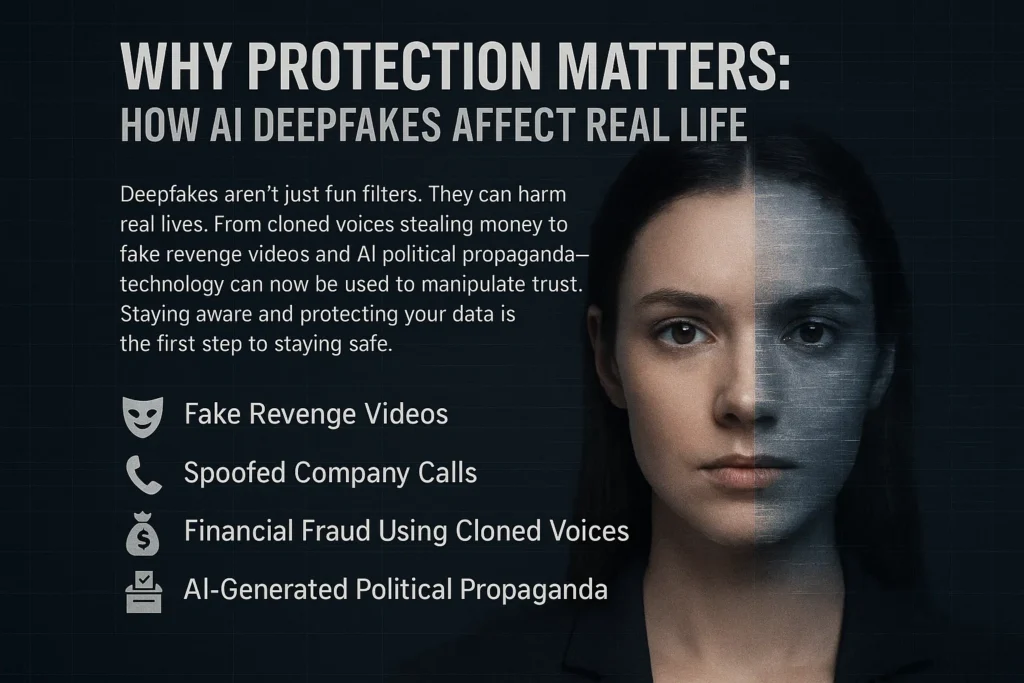
Today, people around the world have already fallen victim to:
- Financial fraud using cloned voices
- Fake revenge videos
- Spoofed calls using company names and deceiving employees
- AI-generated political propaganda
Governments are also taking action. For example, multiple countries are thinking about creating the Preventing Deepfakes of Intimate Images Act, which makes malicious deepfakes illegal.
But rules from one another won’t provide protection.
You need personal defence tactics.
How to Stop AI Deepfakes on Your Data: A Complete Guide
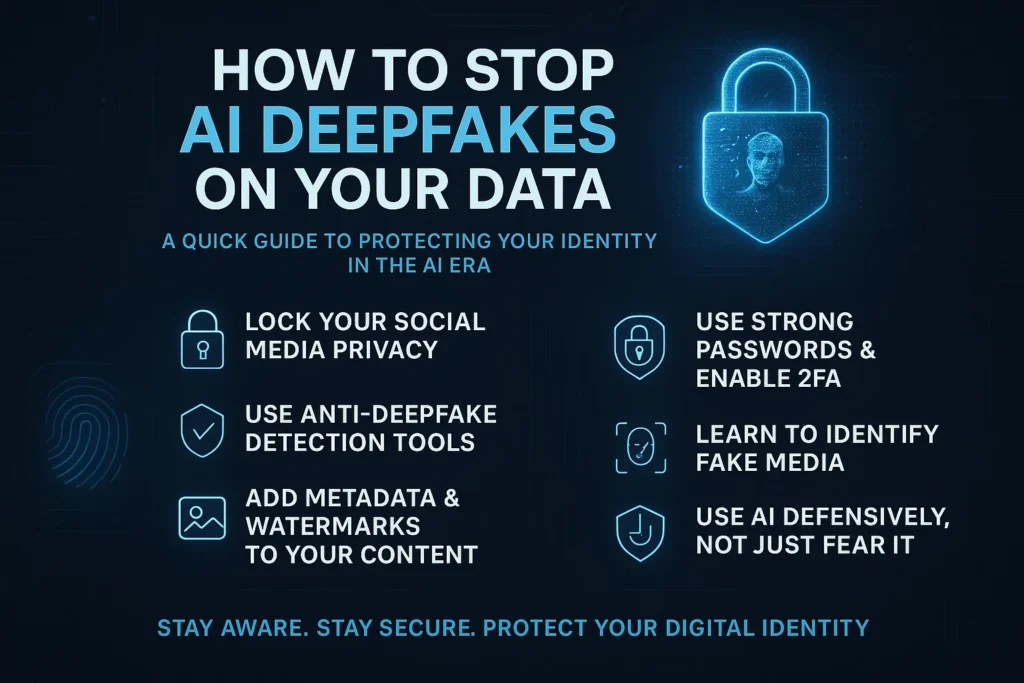
The following concepts are easy, affordable, and useful. They are helpful for everyone, no matter whether you are a regular user, student, creator, or business owner.
1. Lock Social Media
- Make your profile private.
- Delete or hide old, unnecessary public photos.
- Don’t upload videos with your clear voice, as AI can easily clone your voice.
- Don’t upload ID-type selfies (straight face, clear lighting, neutral background).
Think twice before posting:
“Is it possible for someone to use this picture or video to make a fake voice or face model of me?”Don’t post if the response is yes.
2. Use Anti-Deepfake Technology Tools
Tools are available today that use forensic AI to detect fake photos, videos, and audio.
For example:
- Reverse image checking tools
- Voice deepfake detection analysers
- AI watermark scanning tools
Before it spreads, these tools help with finding and sharing illegal content.
3. Give your content metadata and watermarks:
Creators, influencers, and businesses can add:
- Digital signature
- Invisible watermark
- Traceable AI metadata
This makes it difficult to create deepfakes and, if misused, makes it easy to track them.
4. Use strong passwords and 2FA everywhere
Hackers first steal your data, then create deepfakes.
Enable:
- Keep two-factor authentication on
- Use passkeys
- Enable email login alerts
These are the best ways to protect against deepfakes because they prevent hackers from accessing your data in the first place.
5. Learn to recognise fake media
Some easy signs to identify deepfake videos:
- Lip movement seems slightly off
- Blinking patterns are not natural
- Voice sounds robotic or AI-generated
- Background sound is unnaturally clean
So, which of the following can help protect you from malicious deepfakes?
- Awareness
- Use verification tools
- Keep your privacy settings strong.
- Keep your online digital footprint
6. Use AI Defensively (Not Just Fear It):
Instead of getting nervous about AI, if you find value in it, start by understanding the way it works.
Easy step?
Consider creating your own AI tools.
For example: “How to Build Your Own Chatbot Without Coding.”
It takes about an hour to make a chatbot using drag-and-drop programs like ChatGPT Builder, Botpress, or ManyChat.
Which Deepfake Controls Are the Best at the Moment?
| Control Method | Protection Level |
| Digital identity authentication | ⭐⭐⭐⭐⭐ |
| Anti-deepfake technology | ⭐⭐⭐⭐ |
| Watermarking & metadata | ⭐⭐⭐⭐ |
| AI awareness & training | ⭐⭐⭐⭐ |
| Social media privacy | ⭐⭐⭐⭐⭐ |
| Laws & regulations | ⭐⭐⭐ |
Conclusion: The Future for Deepfake Defence
Deepfake technology has become more efficient in recent years, but the good news is that we have better tools to combat it.
Finding a balance is important:
- Remain careful
- Keep your data private
- Be digitally smart
- Verify everything you find online before you blindly trust it.
Easy to protect yourself once you understand how deepfakes function.

I’m Pankaj Chauhan, founder of BeSureTechno. With 3+ years of hands-on tech experience, I cover smartphone reviews, laptop reviews, AI tools, and how-to guides, all based on real-world testing and personal experience.